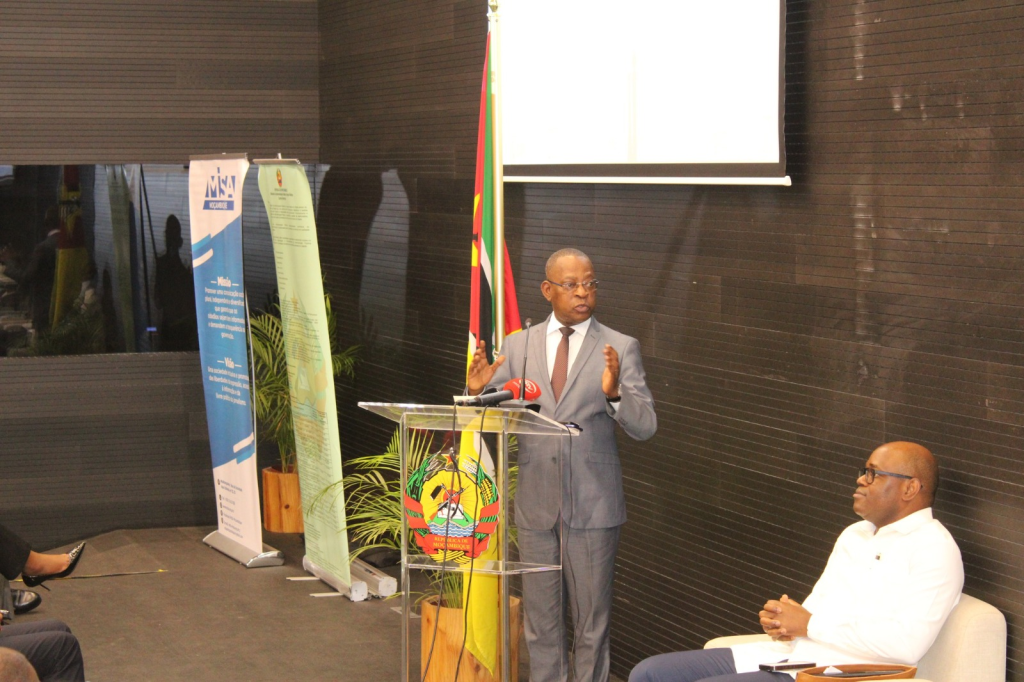
Ombudsman Isaque Chande Highlights Progress and Remaining Challenges in Mozambique’s Right to Information Law
MAPUTO — Marking the 10th anniversary of the Right to Information Act (Law No. 14/2014 of 30 December), the Ombudsman of Mozambique, Isaque Chande, delivered a keynote intervention on 1 October in Maputo at a high-level roundtable organized by the Ministry of State Administration and Public Service through the National Documentation and Information Centre (CEDIMO).
The event, attended by representatives of public and private institutions, civil society, academia, and the media, examined a decade of implementation of the Right to Information (RTI) Law and its impact on governance, transparency, and civic participation.
Ombudsman Chande shared the panel with prominent journalist and social activist Tomás Vieira Mário and Ernesto Nhanale, Executive Director of MISA Mozambique, in a discussion moderated by Judge Paulo Comoane of the Administrative Court.
Significant Advances but Persistent Structural Challenges
In his remarks, Ombudsman Isaque Chande noted that Mozambique has made consistent progress since the adoption of the RTI law, with a sharp increase in citizen engagement: the number of information requests rose from 23,808 in 2023 to 60,433 in 2024, achieving a 95% satisfaction rate.
“When we look at the before and after, today the situation is much better,” Chande said, adding that trainings for public officials and civil society groups have helped expand the understanding and use of this legal instrument.
However, the Ombudsman emphasized that cultural and institutional legacies from the colonial and early independence eras — characterized by secrecy and opacity — still influence some public officials’ behavior.
“Change does not happen overnight. We’re investing in the future — a social transformation project aimed at democratizing the State,” he said. “The public administration is far more transparent today than ten years ago, though challenges remain.”
Right to Information as an Anti-Corruption and Governance Tool
Chande stressed that the Right to Information Act is vital for transparency and combating corruption, empowering journalists, citizens, and civil society to hold public officials accountable.
“People who engage in acts of corruption should think twice — journalists and civil society now have the legal right to access and expose misconduct,” he warned.
The Ombudsman described RTI as part of Mozambique’s broader democratic transformation, strengthening public trust and civic oversight.
Government Reaffirms Commitment
Opening the roundtable, Minister of State Administration and Civil Service Inocencio Impissa reaffirmed the constitutional and governance significance of the RTI law, describing it as a cornerstone for good governance, civic participation, and policy accountability.
The event concluded with a call to further train public servants, deepen citizen awareness, and consolidate a culture where information is seen as a collective asset rather than the exclusive domain of public administration.