Vienna, Austria – September 2, 2025
The Chairman of the Administrative Supervision Board of Libya, Mr. Abdullah Qaderbouh, signed a Memorandum of Understanding (MoU) with Ms. Salayana Tasiva, Dean of the International Anti-Corruption Academy (IACA), to strengthen cooperation in fighting corruption, money laundering, and promoting integrity and good governance.
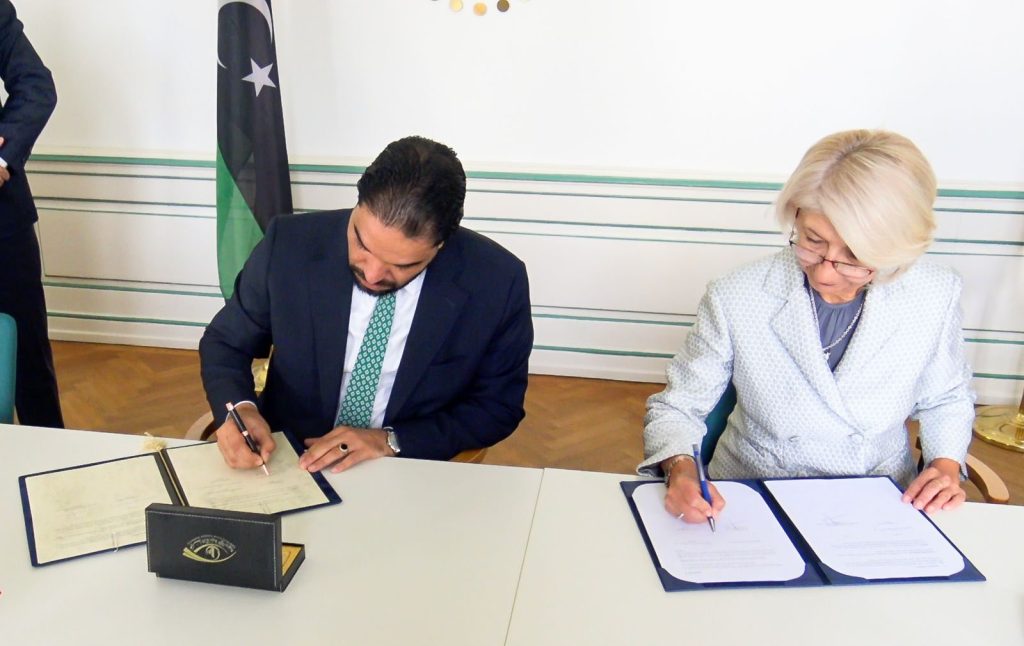
The MoU sets the framework for joint activities, capacity building, knowledge exchange, research collaboration, and engagement with regional and international organizations. It also provides for advanced training programs in investigation, oversight, and transparency to enhance the skills of Libyan officials.
Mr. Qaderbouh described the agreement as a milestone in Libya’s efforts to build stronger institutions, noting that it will contribute to raising the capabilities of anti-corruption professionals, fostering a culture of transparency, and safeguarding public funds. He emphasized that the partnership is not limited to bilateral cooperation but extends to regional and international levels, reinforcing Libya’s role in global anti-corruption initiatives.
Ms. Tasiva welcomed the partnership, praising the commitment of the Libyan Oversight Board to international cooperation in governance and accountability.
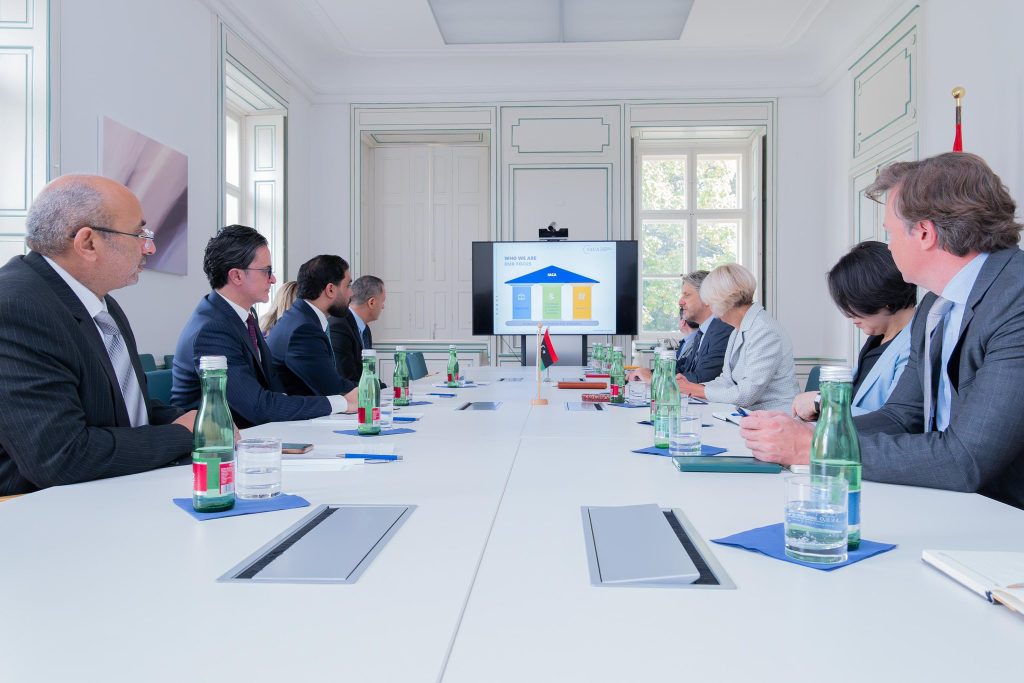
At the conclusion of the signing ceremony, Mr. Qaderbouh formally ratified Libya’s membership in the International Anti-Corruption Academy, marking the country’s full integration into the academy’s global network. A ceremonial visit to the academy’s headquarters followed, highlighting its achievements in advancing anti-corruption knowledge and best practices worldwide.
The IACA, founded in 2011 through a joint initiative of the United Nations Office on Drugs and Crime (UNODC), the Government of Austria, the European Anti-Fraud Office (OLAF), and international stakeholders, serves as a pioneering hub for education, training, and research on anti-corruption, fostering global networks to share solutions and best practices.