Tripoli, Libya: The Administrative Control Authority of Libya, a member institution of the Organization of Islamic Cooperation Ombudsman Association (OICOA), convened a high-level meeting to review government performance, public contracts, national policy implementation, and challenges affecting national security.
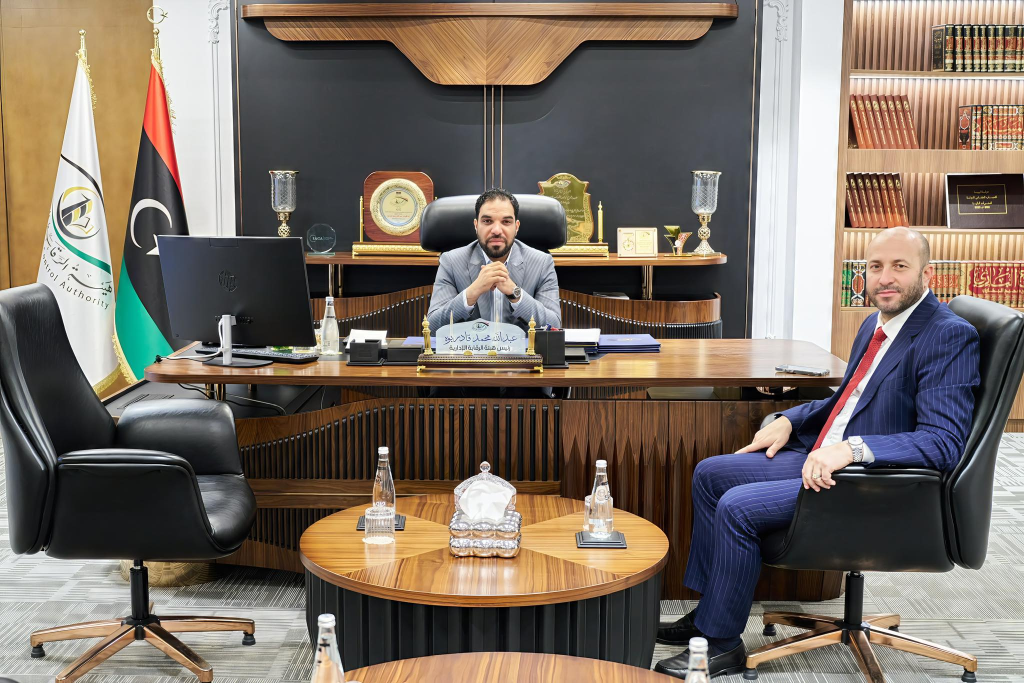
The meeting was chaired by the Chairman of the Administrative Control Authority, Mr. Abdullah Qaderbouh, and held at the Authority’s headquarters in Tripoli. It was attended by the Minister of State for Prime Minister Affairs and the Council of Ministers of the Government of National Unity, Mr. Mohammed bin Galboun.
The discussions formed part of the Authority’s ongoing efforts to strengthen oversight of public administration, monitor implementation of government policies, and ensure compliance with legal and regulatory frameworks governing public institutions.
Participants reviewed a range of strategic issues, including public contracts, government agreements, priority policy initiatives, and institutional mechanisms aimed at improving administrative efficiency and coordination among state institutions.
The meeting also examined the implementation of recommendations contained in the Administrative Control Authority’s Annual Reports No. 54 and 55 for the years 2024 and 2025. Discussions focused on mechanisms for addressing identified shortcomings, strengthening accountability, and improving institutional performance through adherence to established legal and administrative procedures.
Special attention was given to the oversight of public contracts and agreements, including monitoring mechanisms designed to ensure compliance with public procurement regulations, safeguard public resources, and promote transparency, efficiency, and good governance in project implementation and resource management.
The participants further emphasized the importance of strengthening inspection and follow-up departments within ministries and public agencies, enhancing internal control systems, simplifying administrative procedures, and addressing practices that may hinder effective public service delivery.
A significant portion of the meeting was devoted to the issue of irregular migration and its associated security, social, and economic implications. The discussions reviewed ongoing coordination efforts among relevant authorities and examined measures being implemented to address challenges affecting Libya’s national security and stability.
Chairman Abdullah Qaderbouh stressed the importance of ensuring effective implementation of government decisions, corrective measures, and supervisory recommendations. He emphasized that strengthening institutional accountability and governance mechanisms remains essential to improving public sector performance, protecting public resources, preserving national sovereignty, and serving the public interest.
The meeting reflects the Administrative Control Authority’s continued commitment to promoting transparency, accountability, institutional integrity, and effective governance in support of Libya’s development and stability objectives.