Tripoli | Tuesday, 03 February 2026
As a member of the Oversight Team tasked with monitoring the implementation of United Nations Security Council Resolutions Nos. 1970, 1973, and 2769, the Chairman of the Administrative Oversight Board, Abdullah Qaderbouh, participated in the proceedings of the first official meeting of the Team, held at the headquarters of the Administrative Oversight Board in Tripoli.
The meeting focused on reviewing a number of financial and investment files related to Libya’s financial situation and overseas investments, within the framework of strengthening compliance with Security Council resolutions, safeguarding the country’s sovereign assets, and ensuring their management in accordance with approved national and international legal frameworks.
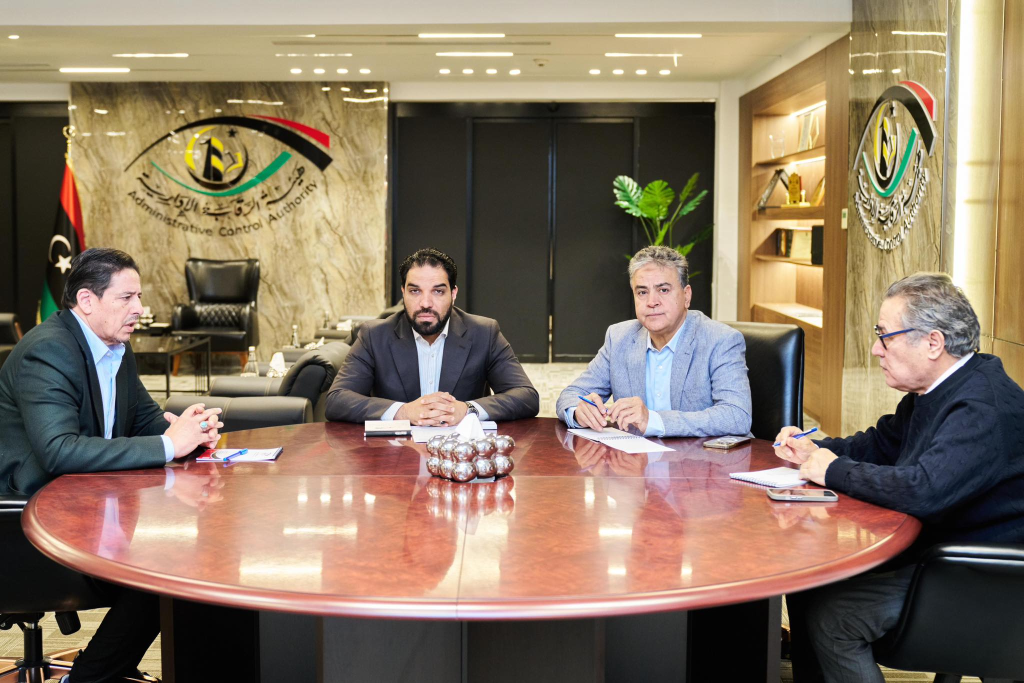
The meeting was attended by members of the Oversight Team, including the Honorable Members of the House of Representatives, Yusuf Ibrahim Ibrahim and Omar Ali Tantosh, as well as Morad Muhammad Hamima, representing the Ministry of Foreign Affairs and International Cooperation.
Discussions addressed the mandate of the Committee established under House of Representatives Resolution No. (113) of 2025, which includes monitoring Libya’s financial situation and foreign investments, assessing compliance with relevant Security Council resolutions, and ensuring adherence to the international rules and standards governing them.
The meeting also examined mechanisms for tracking the implementation of investment activities, verifying compliance with legal and technical requirements, managing frozen sovereign funds abroad, and mitigating risks arising from weak coordination or improper execution.
In his remarks, Chairman Abdullah Qaderbouh emphasized that the Board’s foremost priority is to ensure full compliance with international obligations, strengthen continuous coordination with the Oversight Team and relevant institutions, and establish clear frameworks for cooperation and information exchange in line with national and international legal standards.
He further underlined that the current phase necessitates intensified oversight and the reinforcement of integrity, transparency, and good governance in the management of sovereign assets and investments, in order to protect state finances and enhance the confidence of international partners in Libya’s oversight institutions.
The meeting concluded by stressing the importance of sustained coordination, periodic follow-up, and the preparation of comprehensive reports on the Committee’s findings, in support of protecting public funds and managing Libyan investments in accordance with international best practices.