
Amman, October 2025 — The Integrity and Anti-Corruption Commission announced the results of the National Integrity Index for its second term (2024–2025) during a national ceremony held under the patronage of the Prime Minister at the Royal Cultural Centre.

In his keynote address, the Chairman, Dr. Mohannad Hijazi, described the Index as a milestone in Jordan’s governance reform journey, reflecting the state’s enduring commitment to justice, equality, and the rule of law. He noted that this initiative serves as a tangible translation of His Majesty King Abdullah II Ibn Al-Hussein’s vision for building institutions grounded in integrity, competence, accountability, and public trust.
Dr. Hijazi emphasized that sustainable development cannot be achieved without a governance system that actively combats corruption, rewards integrity, and promotes accountability. He highlighted the Index as an instrument of reform—one that encourages public institutions to evaluate and renew their administrative systems in line with principles of transparency and efficiency.
Presenting the findings of the second cycle of the Index, Dr. Hijazi announced that Jordanian ministries and public institutions had recorded a 14% improvement in adherence to national integrity standards compared to the first cycle. He stressed that the results are not merely rankings, but rather a national framework for institutional development and an indicator of Jordan’s steady progress toward administrative modernization.
Dr. Hijazi further explained that data alone cannot drive change—it is the political and institutional will to transform those findings into actionable policies that produces tangible benefits for citizens. He called upon public entities to integrate the Index results into their annual performance evaluations, linking them to executive initiatives that strengthen public confidence and administrative excellence.
“Integrity is not a static state to be observed,” Dr. Hijazi remarked. “It is a culture to be cultivated, a system to be built, and an impact to be measured.”
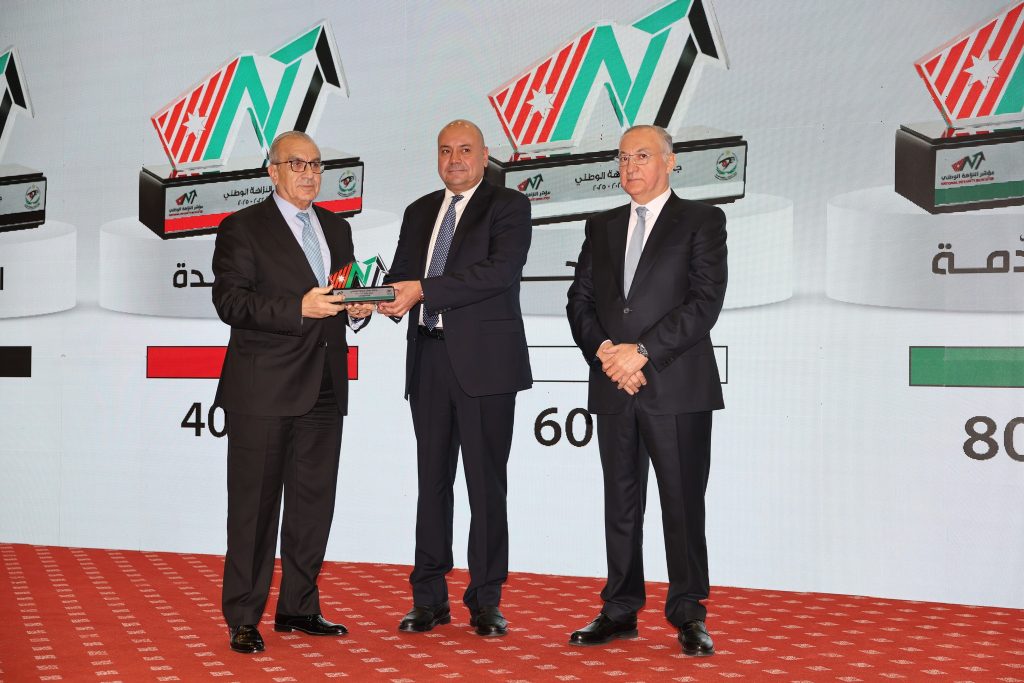
At the conclusion of the ceremony, awards were presented to the top-performing institutions:
- Ministry of Digital Economy and Entrepreneurship secured first place among ministries, followed by the Ministry of Planning and International Cooperation, and the Ministry of Public Works and Housing.
- In the public departments and government institutions category, Public Prosecution Department ranked first, followed by Jordan Customs Department and the Securities Depository Center.
- Among government universities, Jordan University of Science and Technology achieved first place, followed by the German Jordanian University and the University of Jordan.
- In the government hospitals category, Al-Bashir Hospital ranked first, followed by Iman Hospital–Ajloun and the King Abdullah University Hospital.
A total of 119 government entities were evaluated across five categories, encompassing ministries, government institutions, universities, and hospitals, to assess their compliance with national integrity standards.
The results reaffirm Jordan’s commitment to fostering integrity, transparency, and accountability across the public sector and mark a significant step forward in the Kingdom’s pursuit of comprehensive administrative and ethical reform.