Kampala: Member of the OICOA Inspector General of Government (IGG) of Uganda and President of the Eastern Africa Association of Anti-Corruption Authorities (EAAACA), Lady Justice Naluzze Aisha Batala, has emphasized the critical role of financial investigations in detecting crime, dismantling criminal networks, and recovering stolen assets.
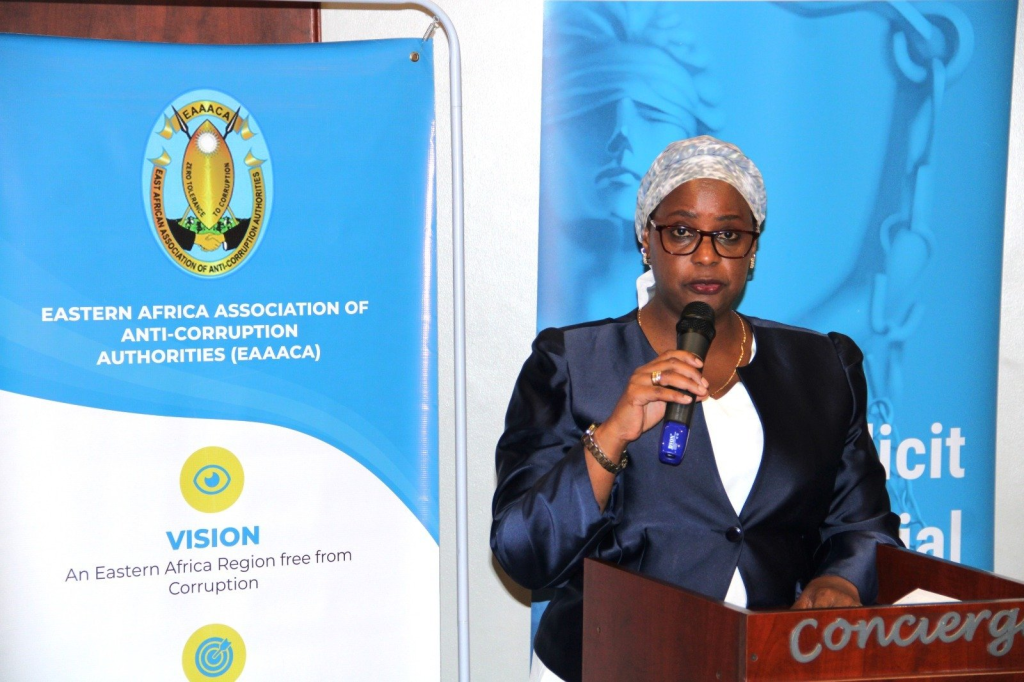
She made these remarks while inaugurating a five-day advanced training on financial investigations and virtual assets in Kampala. The programme is organized by EAAACA in collaboration with the United Nations Office on Drugs and Crime (UNODC).
The training is informed by findings from a 2025 Baseline Mapping Exercise, which identified significant gaps in Uganda’s anti-corruption framework. These include limited capacity in forensic accounting, financial analysis, and digital investigations, as well as challenges in accessing financial information and the absence of standardized procedures.
The programme brings together participants from various Anti-Corruption Agencies (ACAs) and focuses on building practical skills in financial investigations, digital evidence handling, open-source intelligence, and tracing virtual assets, including through blockchain technologies.
Lady Justice Naluzze underscored the importance of enhanced inter-agency collaboration, noting that effective enforcement requires coordinated efforts among investigators, prosecutors, regulators, and the judiciary. She reaffirmed EAAACA’s commitment to supporting member states in developing resilient and technology-driven anti-corruption systems, urging participants to translate the training into actionable outcomes.
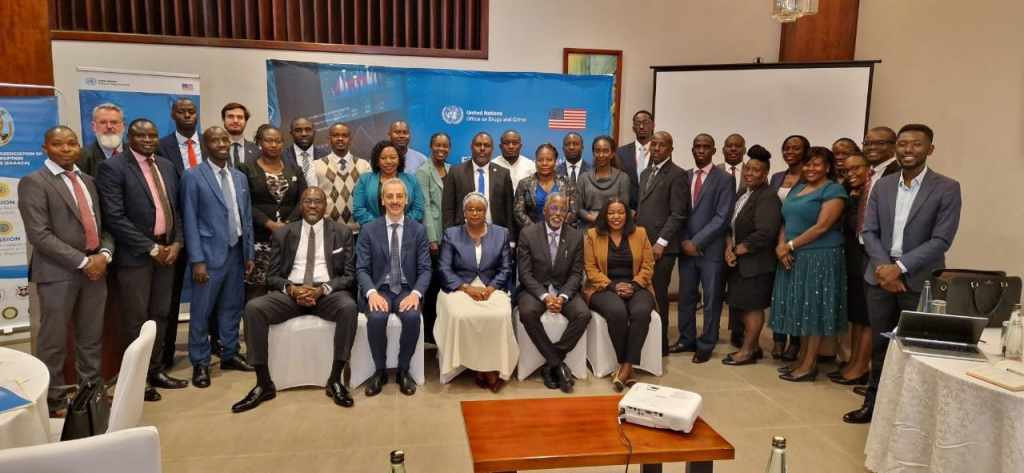
Mr. F. Checchi, Team Lead at the UNODC Anti-Corruption Hub for Africa, stated that the initiative aims to identify practical solutions in the fight against corruption. He encouraged participants to actively engage, share experiences, and apply the knowledge gained to strengthen investigations and asset recovery efforts.
Dr. Ernest Katwesigye, Uganda’s Lead Focal Person for the Asset Recovery Inter-Agency Network for Eastern Africa (ARINEA), noted that the training serves not only to enhance technical capacity but also as a platform for fostering stronger collaboration among anti-corruption agencies in addressing financial crime.