An opening ceremony for the exhibition titled “Unsilenced Truths” was held at the premises of the Ombudsman Office of the Republic of Azerbaijan, at the initiative of Ombudsman Sabina Aliyeva. The exhibition presents archival materials and historical evidence concerning genocide and ethnic cleansing policies carried out against Azerbaijanis over various periods.
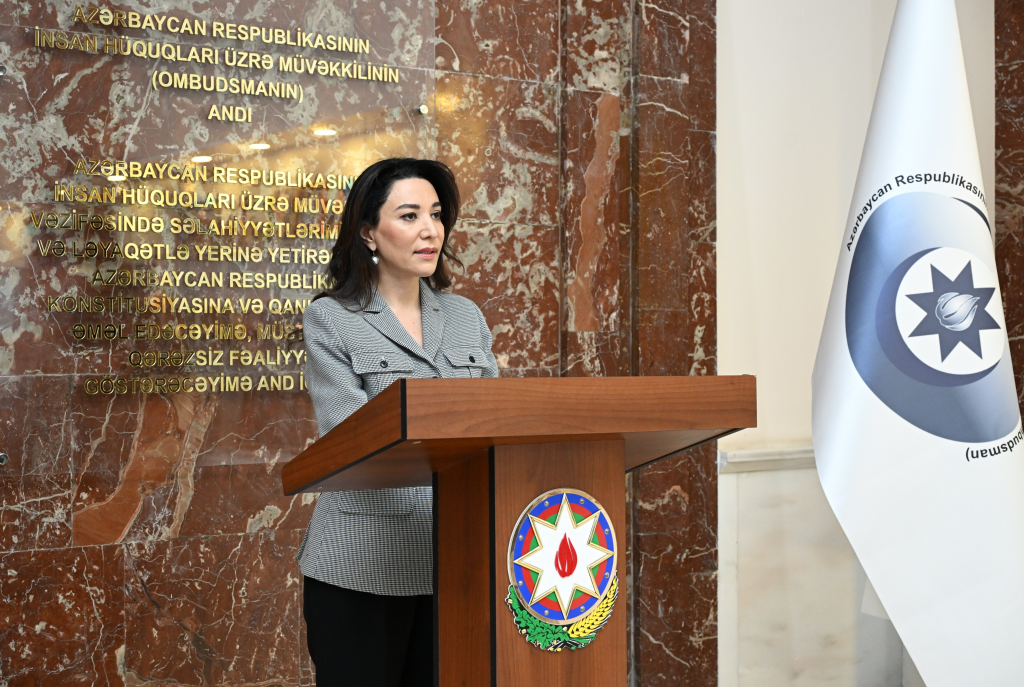
The event began with the performance of the National Anthem of the Republic of Azerbaijan, followed by a one-minute moment of silence in memory of the martyrs.
In her opening remarks, Ombudsman Sabina Aliyeva emphasized that the exhibition serves an important public purpose: honoring the memory of the victims, conveying historical facts to society, and transmitting these truths to future generations. She recalled that during March–April 1918, Azerbaijanis were subjected to mass atrocities in Baku and other regions, including Shamakhi, Guba, Karabakh, Zangezur, Nakhchivan, and additional territories, resulting in the killing of tens of thousands of civilians and the destruction of numerous settlements. The Ombudsman stressed the importance of assessing these events as genocide in accordance with international law, as among the gravest crimes against peace and humanity.
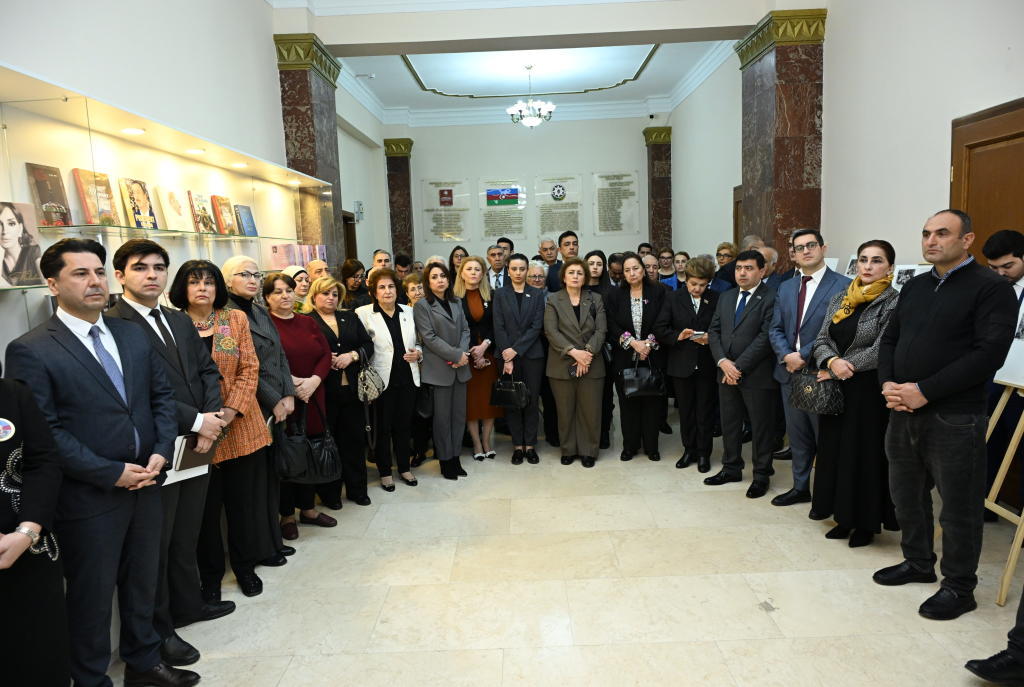
The programme included remarks by Aziz Alakbarli, Chairman of the Board of the Western Azerbaijan Community and Member of Parliament; Nazim Mustafa, Associate Professor at the Institute of History of the Azerbaijan National Academy of Sciences; and Polad Jafarzade, a representative of the Ombudsman Office. The speakers highlighted long-standing deportation and ethnic cleansing policies against Azerbaijanis, including the forced expulsion of hundreds of thousands of Azerbaijanis from Western Azerbaijan (present-day Armenia). Reference was made to deportation waves in 1905–1906, 1918–1921, 1948–1953, and 1987–1991, during which fundamental human rights were severely violated. The importance of legal assessment and international recognition of these crimes, along with restoring the rights of victims, was underscored.
The event also featured a presentation by Azada Novruzova, an Ombudsman Office staff member, on her book “Lovers of Victory: The Martyrs of Gharakilsa,” prefaced by Ombudsman Sabina Aliyeva. The author noted that the publication includes biographical profiles of fighters from the Gharakilsa district of the Zangezur region of Western Azerbaijan who were killed or went missing during battles for Azerbaijan’s territorial integrity.
The exhibition includes archival documents, photographs, and historical materials reflecting the scale and consequences of genocide and deportation policies. The Ombudsman Office noted that these materials contribute to preserving historical memory, raising public awareness in the field of human rights, and supporting objective international understanding of the events.
At the conclusion of the ceremony, participants toured the exhibition. The Ombudsman Office further noted that its documentation efforts—along with relevant reports and communications submitted to international organizations—are being carried out on a consistent basis. As part of these efforts, the “Unsilenced Truths” exhibition aims to contribute to the restoration of historical justice and the protection of human rights.