
Baku — The Human Rights Ombudsman of Azerbaijan, Ms. Sabina Aliyeva, participated in the international conference, “The Constitution and the Rule of Law in Modern Legal Systems,” held in honor of the 30th anniversary of the adoption of the Constitution of Azerbaijan.
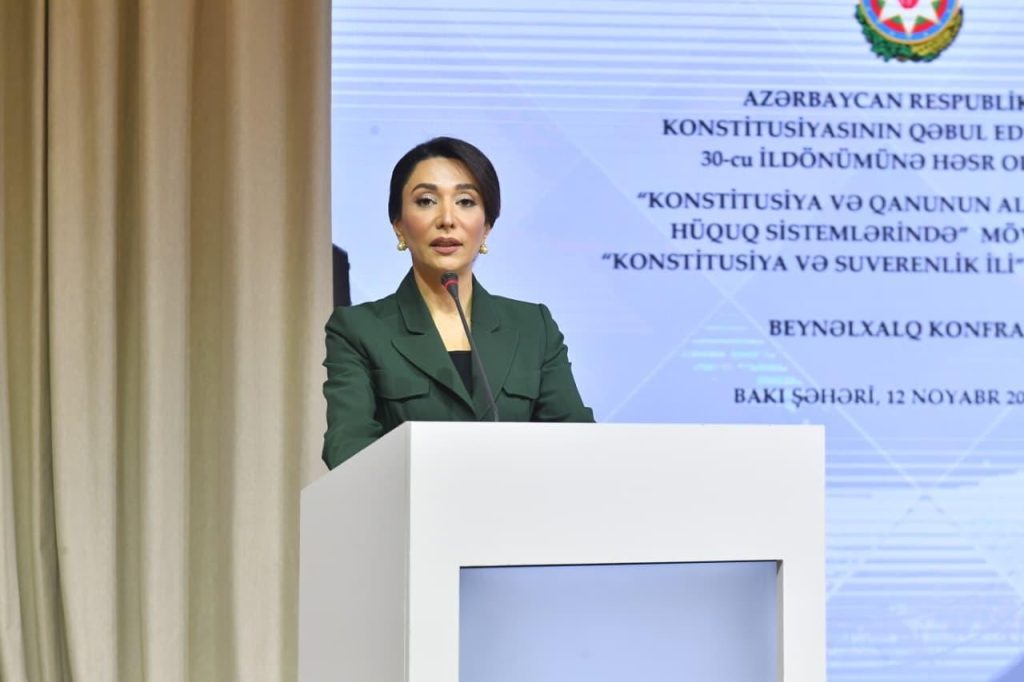
In her opening remarks, the Excellency stated that the Constitution of independent Azerbaijan — crafted under the leadership of National Leader Heydar Aliyev and adopted through a national referendum — enshrined the protection of human rights and freedoms as the supreme purpose of the state, demonstrating the nation’s highest commitment to human rights.
Ms. Aliyeva highlighted the pivotal decrees and initiatives of Heydar Aliyev, which led to the creation of a comprehensive national human rights program, the establishment of the Ombudsman institution as an effective protection mechanism, the adoption of the Constitutional Law on the Ombudsman, and the corresponding constitutional amendments.
Ms. Aliyeva stated that the successful policies of President Ilham Aliyev, combined with far-reaching reforms and significant decisions, have ushered in a new stage of development in Azerbaijan’s statehood. She emphasized that constitutional amendments and improvements to the legal framework have strengthened the rule of law, democratic governance, and the principles of a modern legal state.
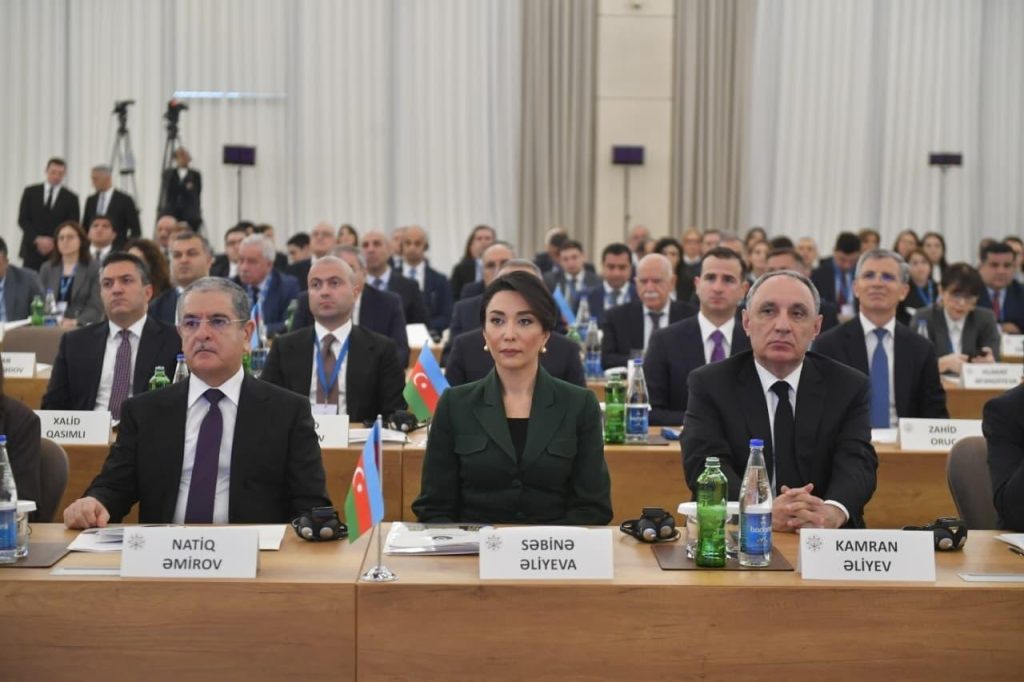
Ms. Aliyeva noted that recent legal reforms launched by the President have further aligned the mandate of the Ombudsman with international human rights standards, while expanding its areas of activity in response to emerging needs.
She highlighted that global trends including geopolitical shifts, expanding digital ecosystems, and rapid technological change require new, flexible mechanisms for the effective protection of human rights.
The Commissioner underscored the need to enhance the legal framework to harmonize new legal relations with constitutional principles, study international best practices, ensure the responsible use of digital technologies and artificial intelligence, and establish coordinated cybersecurity systems.