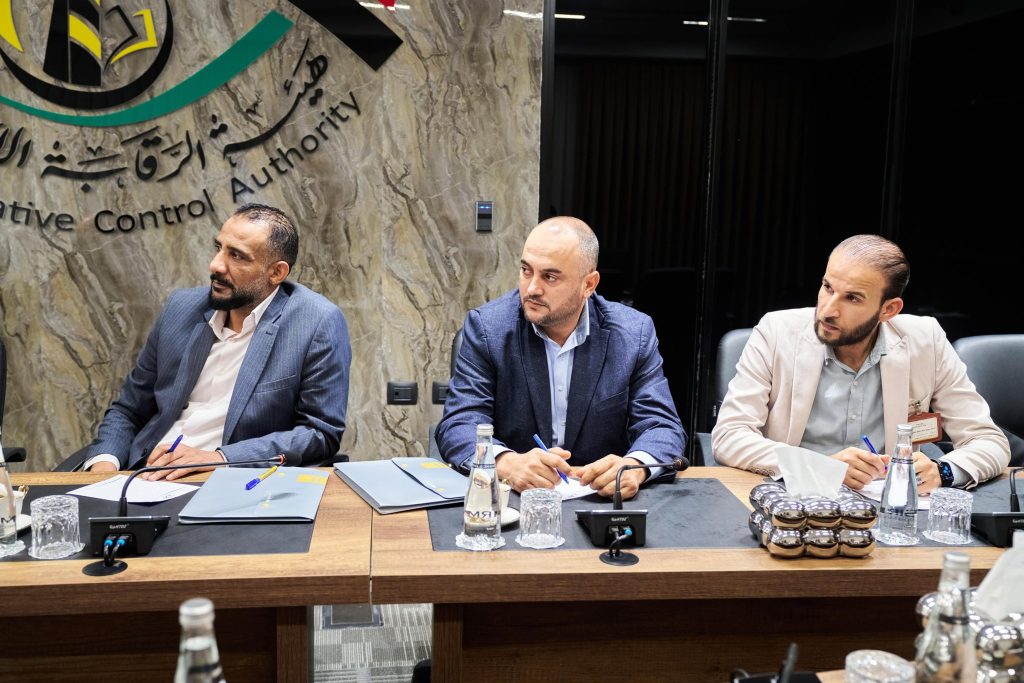
Tripoli, — The President of the Administrative Oversight Board, Mr. Abdullah Qaderbouh, chaired an extensive meeting with the Directors of the General Administration Departments to review the performance of the Contract Inspection Department and the mechanisms for monitoring the execution of development projects across the country.
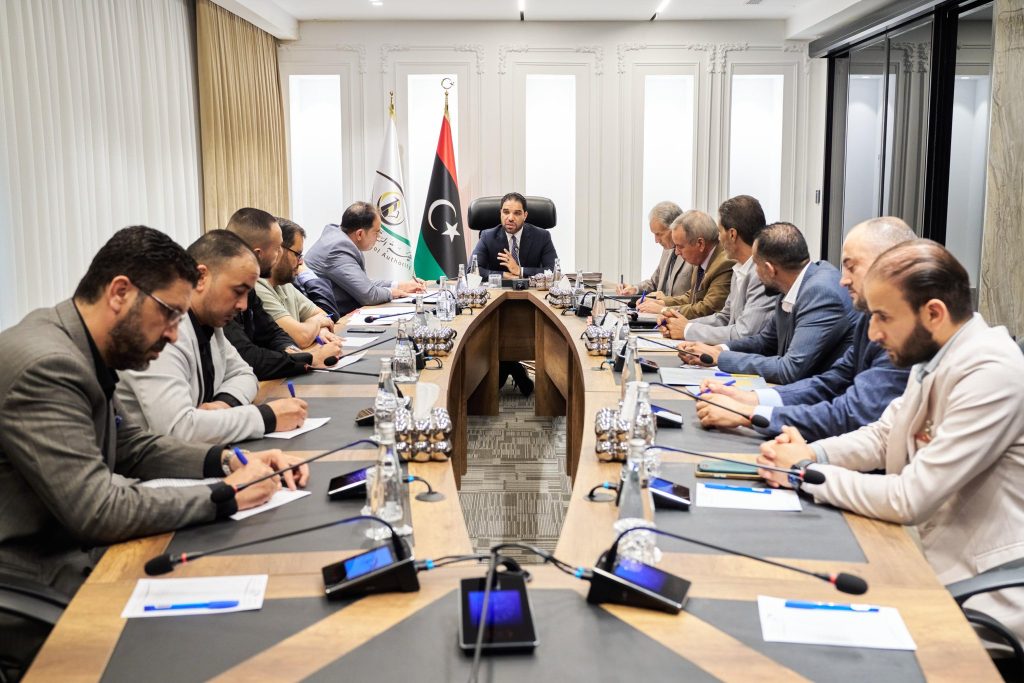
The meeting was held within the framework of the Board’s ongoing efforts to enhance transparency, efficiency, and accountability in the management of public funds, and to strengthen the supervisory framework governing project implementation.
During the session, Mr. Qaderbouh emphasized the importance of rigorous oversight, comprehensive audits, and real-time monitoring of all ongoing public contracts and infrastructure initiatives. He stressed that compliance with Law No. (2) of 2023, which supplements Law No. (20) of 2013 establishing the Administrative Oversight Body, is mandatory for all entities, and that legal action will be taken against any violations of established procedures and regulations.
The meeting also reviewed field inspection reports, discussed technical measures for auditing contract payments, and examined the progress indicators of ongoing projects. Special focus was placed on ensuring that all contracts adhere to approved technical specifications, financial frameworks, and implementation timelines.
“The Board remains committed to upholding the principles of transparency and good governance by adopting continuous monitoring, preventive auditing, and measurable performance indicators,” Mr. Qaderbouh stated. “These measures ensure that every public project achieves its intended results efficiently and in full compliance with the law.”
Mr. Qaderbouh further highlighted the Board’s institutional development initiatives, which include revising documentation systems, updating contract review forms, and holding periodic coordination meetings with key stakeholders to streamline communication and strengthen internal supervisory mechanisms.
The meeting concluded with directives to intensify monitoring visits, improve data collection from the field, and adopt digital tracking tools to support timely oversight and enhance responsiveness to administrative concerns.
This meeting forms part of a series of periodic technical sessions held under the Board’s strategic plan, which aims to promote transparency, integrity, and citizen confidence in state institutions, while aligning oversight practices with contemporary administrative and legislative reforms.