Tripoli | Sunday, 25 January 2026
The Chairman of the Administrative Oversight Board—a member institution of the Organization of Islamic Cooperation Ombudsman Association (OICOA)—Mr. Abdullah Qaderbouh, held a coordination meeting at the Board’s headquarters in Tripoli with the Chairman of the National Board for Urban Planning, Dr. Ahmed Al-Mukhtar Toumi.
The meeting focused on the classification of urban projects and development schemes, as well as the review of challenges and administrative bottlenecks that may arise during the preparation and implementation phases. Discussions addressed mechanisms for classifying plans and projects based on priority criteria and strategic importance, with the aim of ensuring clarity of responsibilities, improving workflow organization, and enhancing the effectiveness of institutional oversight, monitoring, and evaluation.
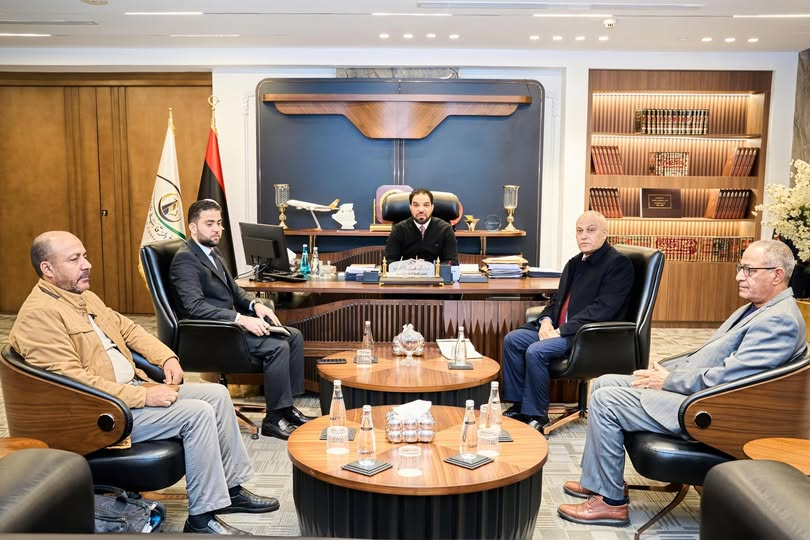
Participants also examined obstacles that may hinder progress, including coordination challenges among relevant entities, the regulation of legal and procedural frameworks, and ensuring compliance with approved standards during project implementation. Emphasis was placed on the importance of clear urban land classification, determination of land use, regulated distribution of services, and strict adherence to approved planning schemes.
In this context, the meeting highlighted the role of the Administrative Oversight Board in monitoring the implementation of urban plans, addressing organizational and operational constraints, and ensuring sound planning and efficient management of public resources. It was noted that the National Board for Urban Planning is in the process of engaging specialized international firms to conduct advanced urban classifications for several Libyan cities, beginning with Zliten, Tripoli, and Misrata, in line with internationally recognized standards.
Mr. Qaderbouh stressed that all classification and implementation procedures must be carried out in accordance with applicable laws and regulations, and strictly in consideration of the public interest. He affirmed that the Board will closely monitor all related procedures within the scope of its statutory mandate.
The follow-up process will commence through the General Administration for the Inspection of Contracts and Project Implementation, including the review of contracts, verification of procedural integrity, and oversight of the legal and technical status of selected companies, up to the allocation and execution stages of approved projects.
This meeting reflects the Administrative Oversight Board’s continued commitment—consistent with the principles and best practices promoted by OICOA—to strengthening institutional coordination, ensuring compliance with approved plans, and promptly addressing administrative and operational challenges, thereby supporting effective governance and sustainable urban development in Libya.