Administrative Control Authority of Libya Strengthens Oversight of Oil Revenue Flows to Enhance Transparency and Economic Stability
The Chairman of the Administrative Control Authority of Libya, Mr. Abdullah Qaderbouh, held a high-level meeting in Tripoli on 31 March 2026 to discuss mechanisms for managing oil export revenues and strengthening financial oversight.
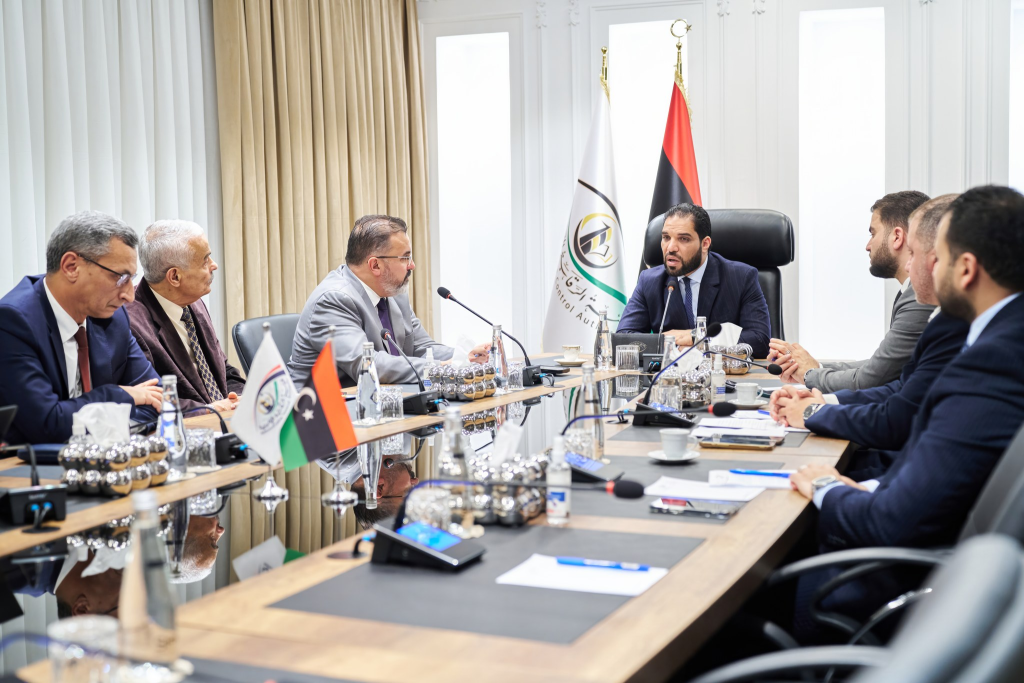
The meeting brought together senior officials, including Mr. Mohammed Ali Al-Drat, Chairman of the Board of Directors of the Foreign Bank of Libya; Mr. Sadiq Bey’u, Director of the International Marketing Department at the National Oil Corporation; Mr. Mohamed Al-Amari, General Manager of the bank; and Mr. Ali Mansour, Chairman of the Follow-Up Committee on Closing Accounts and Director General of Economic Sector Monitoring.
Discussions focused on key challenges related to the flow of oil revenues, including the collection of export proceeds, settlement of international payments, and the role of financial institutions in tracking remittances and managing Libyan assets abroad. Participants also addressed the importance of ensuring the availability of hard currency and securing oil supplies for domestic consumption.
The meeting highlighted the critical role of oil revenues in supporting national development, financing infrastructure projects, and enhancing the delivery of essential services and social programs.
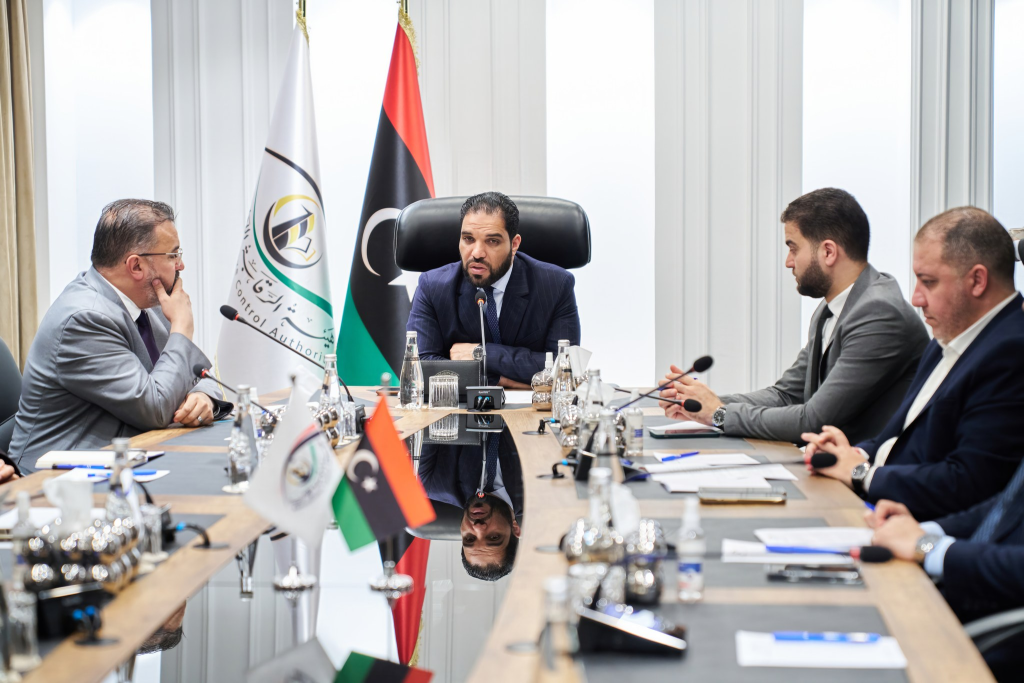
Mr. Qaderbouh emphasized the need to strengthen oversight across all financial and oil-related institutions to ensure transparency, efficiency, and proper management of public funds. He stressed the importance of addressing discrepancies in data reported by relevant entities concerning oil exports, imports, and associated revenues.
To this end, he directed the establishment of a specialized technical monitoring committee tasked with reviewing and reconciling data from key institutions, including the National Oil Corporation, the Central Bank of Libya, and the Foreign Bank of Libya. The committee will work to verify the accuracy of reported oil export volumes and corresponding financial returns, ensuring consistency and transparency.
The Chairman also underscored the importance of developing forward-looking strategies to accelerate revenue collection, streamline international financial transactions, and strengthen financial governance. He called for diversifying revenue sources and enhancing economic reforms to support sustainable development and fiscal stability.
This initiative reflects Libya’s ongoing efforts to reinforce accountability, safeguard public resources, and promote transparency in the management of its primary economic sector, in line with international best practices and OICOA’s mission to advance good governance among its member institutions.