Tripoli Hosts National Meeting on Implementation and Monitoring of Anti-Corruption Strategy 2025–2030
The Administrative Control Authority of Libya, a member institution of the Organization of Islamic Cooperation Ombudsman Association (OICOA), convened a high-level national meeting in Tripoli to discuss the implementation, monitoring, evaluation, and reporting plan of the National Strategy for Performance Monitoring, Combating and Prevention of Corruption (2025–2030).
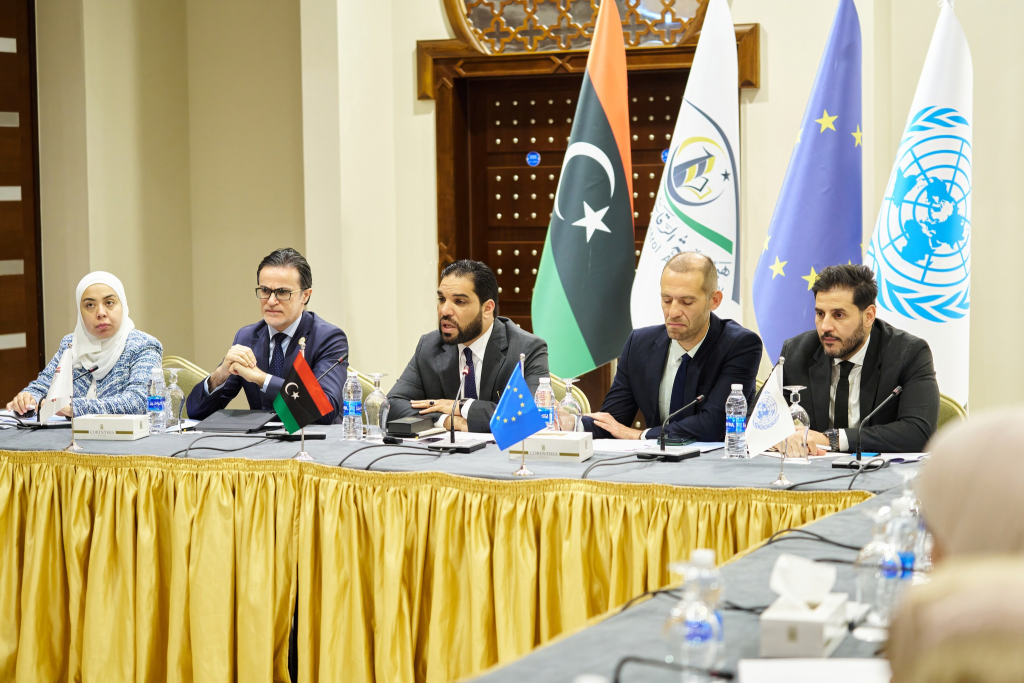
Held on 29 March 2026 at the Corinthia Hotel, the meeting was inaugurated by the Chairman of the Administrative Control Authority, Mr. Abdullah Qaderbouh. The event brought together key national and international stakeholders, including Mr. Ibrahim Abdul Karim Ibrahim Ali, Chairman of the High Committee for Supervision of the Strategy, Ms. Mona Salem, Regional Coordinator of the United Nations Office on Drugs and Crime (UNODC) for the Middle East and North Africa, and Mr. Sturgios Trajodas, Director of the Economic Development, Private Sector and Trade Programme of the European Union Mission in Libya.
The meeting was attended by representatives from oversight bodies, the High Committee responsible for monitoring the strategy’s implementation, international organizations, and a number of experts specializing in governance and anti-corruption.
Participants reviewed the main pillars of the national strategy, which aims to promote integrity and transparency in public institutions, enhance performance monitoring systems, and reduce opportunities for corruption. Discussions focused on defining implementation mechanisms, including identifying key executive actions, developing performance indicators, establishing timelines, and adopting periodic monitoring and evaluation frameworks.
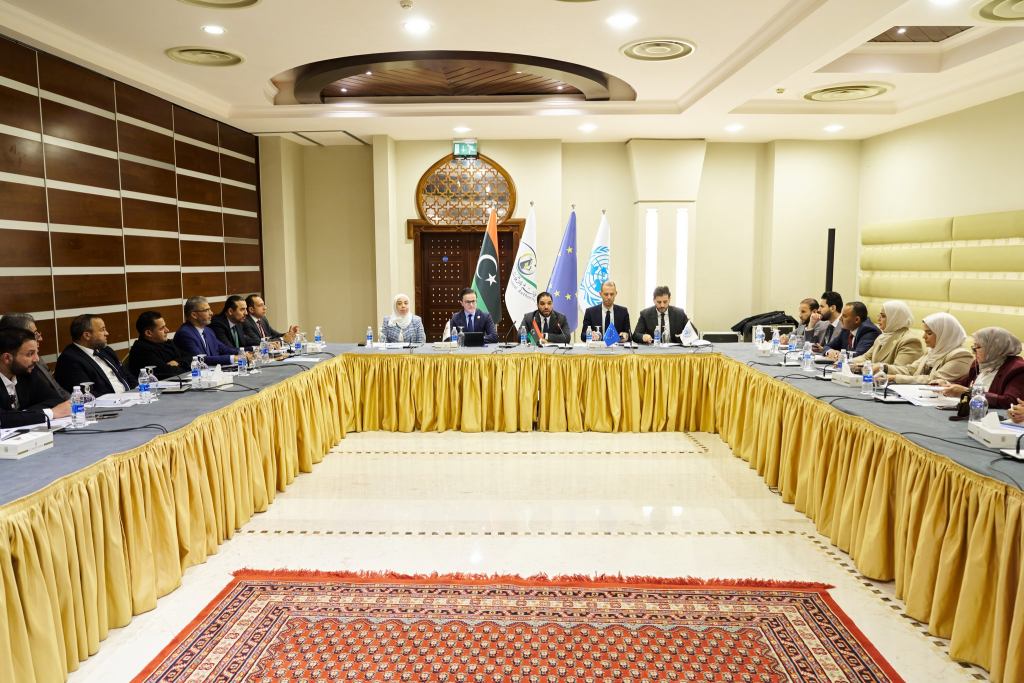
The meeting also emphasized the importance of aligning national efforts with regional and international best practices, particularly through effective coordination among stakeholders and the development of comprehensive reporting mechanisms.
This initiative forms part of the second phase of a European Union-funded project titled “Building National Capacity in Libya to Prevent, Fight Corruption and Money Laundering.” The project is being implemented in cooperation with the United Nations Office on Drugs and Crime (UNODC) and the High Committee supervising the national strategy.
The project aims to strengthen the capacity of Libyan institutions in preventing, detecting, and investigating corruption, as well as combating financial crimes. It also promotes a participatory approach involving governmental institutions, oversight bodies, the judiciary, the private sector, and civil society organizations.
The meeting reflects Libya’s ongoing commitment to strengthening its anti-corruption framework, enhancing institutional coordination, and promoting transparency and accountability, in line with international standards and OICOA’s mission to advance good governance among its member institutions.