Tripoli — Sunday, 5 October 2025:
The Chairman of the Administrative Control Authority (ACA) of Libya, Mr. Abdullah Qaderbouh, held a meeting today with His Excellency Mr. Govin Pijic, Ambassador of the Republic of Türkiye to Libya, to explore ways to enhance bilateral cooperation and strengthen institutional ties between the two countries.
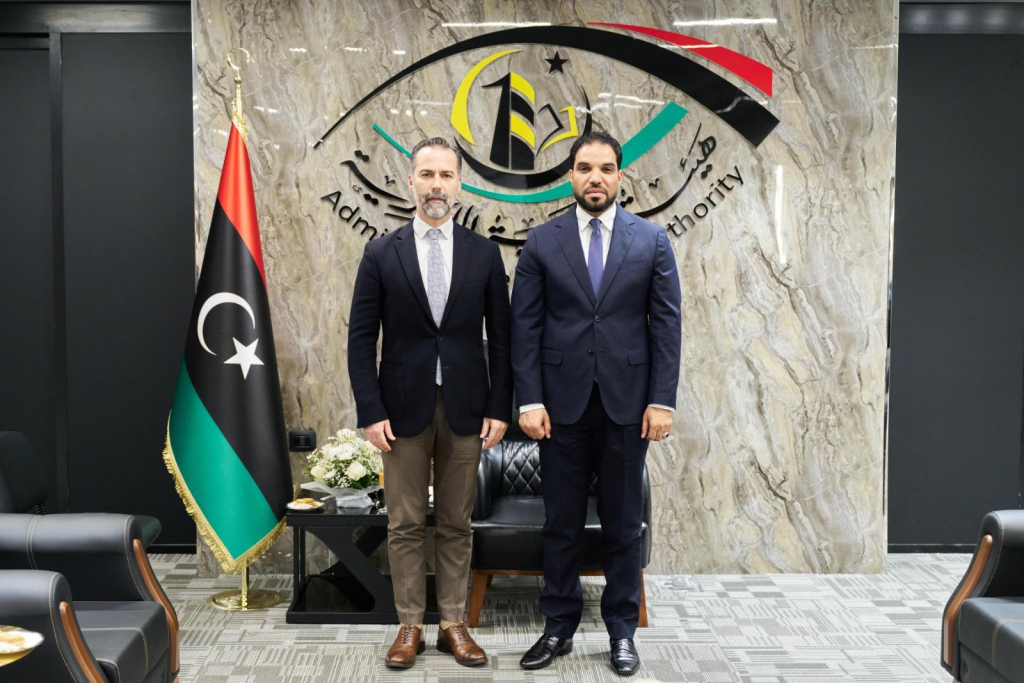
The discussion focused on joint efforts to combat corruption and the exchange of expertise with Turkish oversight and accountability bodies. Both sides highlighted the importance of sharing best practices in governance reform and public sector transparency to strengthen institutional capacity.
Mr. Qaderbouh highlighted the need to open new horizons for collaboration by establishing mechanisms for specialized training programs in supervisory and auditing fields, while also addressing key topics such as good governance, functional competency development, and legal accountability standards.
The Ambassador of Türkiye welcomed the initiative, expressing his country’s readiness to support knowledge sharing and technical cooperation, particularly in areas of institutional reform and anti-corruption strategies.
This meeting is part of the ACA’s broader strategy to expand international partnerships, foster capacity building, and strengthen Libya’s governance and oversight systems through global experience exchange and professional development.
The meeting focused on enhancing joint efforts to combat corruption, with both sides exploring opportunities to exchange expertise and best practices between Libya’s Administrative Oversight Board and its Turkish counterparts.
Mr. Qaderbouh emphasized the importance of opening new channels of collaboration, including the development and implementation of specialized training programs in the supervisory and auditing sectors. He underlined that such programs would help build professional capacity, promote good governance, and strengthen the implementation of transparency and legal accountability standards across both countries.
The discussions also covered the potential for broadening cooperation frameworks, fostering knowledge transfer, and aligning efforts to improve oversight mechanisms and institutional efficiency.
This meeting marks another step in the Board’s strategy to expand international partnerships, benefiting from comparative experiences to advance public integrity, effective governance, and institutional reform in Libya.