Tripoli | Monday, 26 January 2026
The Chairman of the Administrative Control Authority Libya a member institution of the Organization of Islamic Cooperation Ombudsman Association (OICOA)—Mr. Abdullah Qaderbouh, chaired an expanded coordination meeting at the Authority’s headquarters in Tripoli with senior government officials to review key economic, financial, tax, customs, and law-enforcement files.
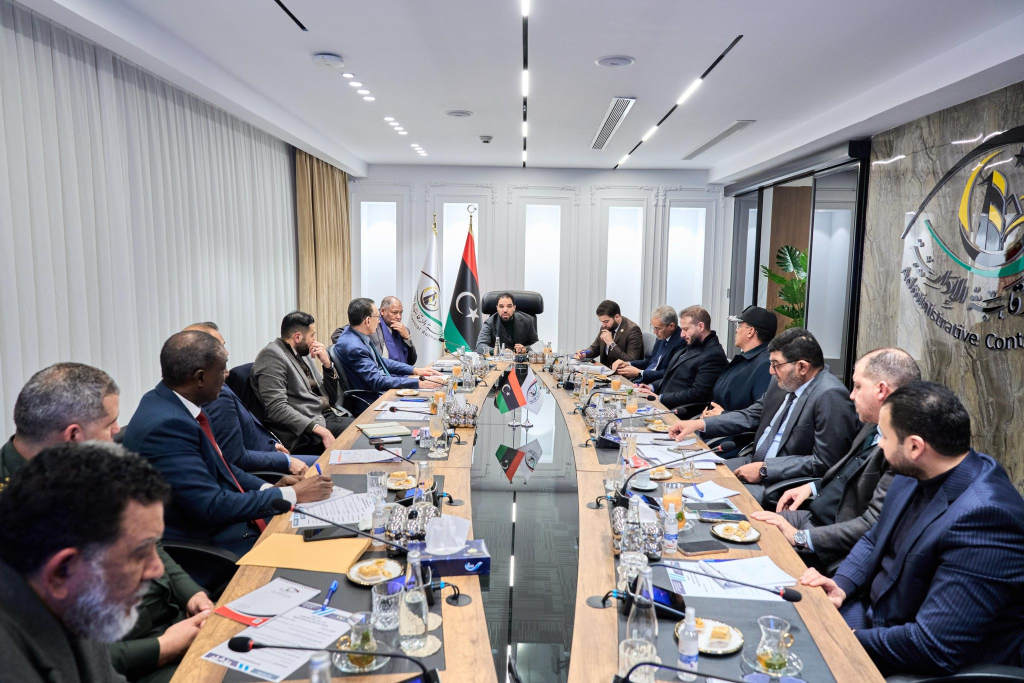
The meeting was attended by the Minister of Economy and Trade of the Government of National Unity, Mr. Mohammed Al-Haweej, the Minister of Finance, Mr. Khaled Al-Mabrouk, the Head of the Tax Authority, Mr. Mohammed Idris, the Director General of the Customs Authority, Major General Moussa Ali Mohammed, and the Director of the Law Enforcement Department of the General Administration for Security Operations at the Ministry of Interior, Major General Abdul Hakim Al-Khaitouni.
Discussions focused on developments in economic and financial files and explored mechanisms to enhance institutional coordination among the concerned entities. The meeting reviewed the measures adopted by the Ministry of Economy and Trade for the approval and implementation of the 2026 Import Plan, aimed at meeting local market needs and achieving balance between supply and demand. Observations recorded by the Administrative Control Authority on import files and letters of credit were also examined, along with mechanisms for addressing them to enhance transparency and limit shortages.
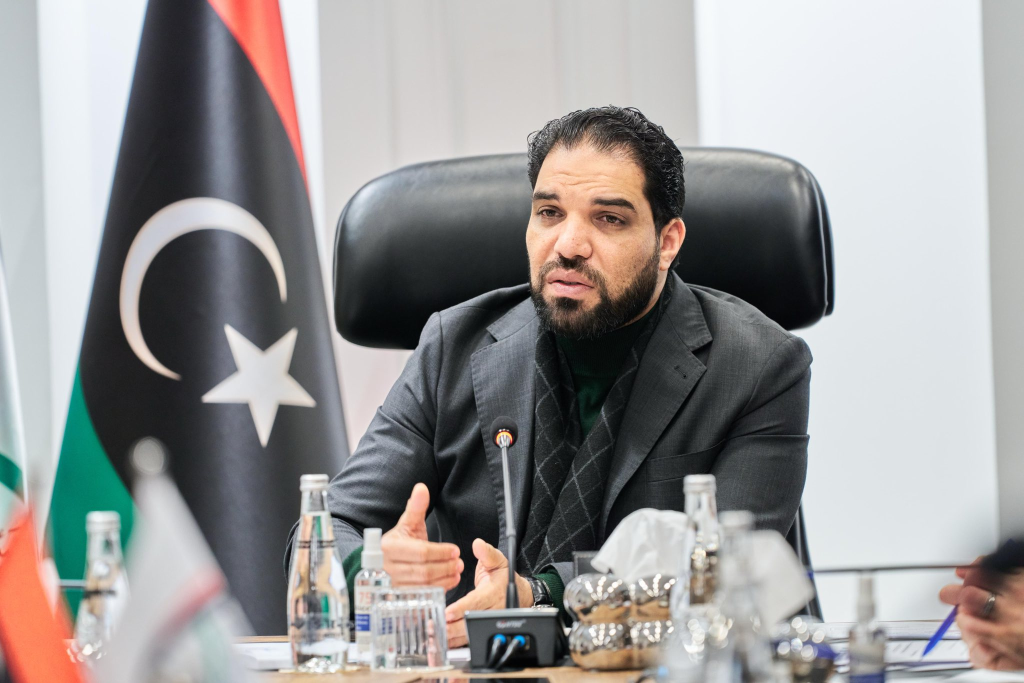
The meeting further addressed the implementation of pricing decisions for essential commodities, monitoring mechanisms adopted by law-enforcement authorities, and the factors contributing to continued price increases in local markets. Participants discussed solutions to regulate markets, curb illegal practices, and protect citizens’ purchasing power.
In the area of public finance, the meeting reviewed procedures undertaken by the Ministry of Finance regarding the closure of final accounts, including tightening expenditure controls for fiscal year 2025, closing the financial records of Treasury-funded entities, and ensuring compliance with financial legislation, with a view to strengthening fiscal discipline and good governance.
Mr. Qaderbouh emphasized that the current phase requires the highest level of coordination and integration among all entities concerned with economic and financial management. He stressed the importance of ensuring the integrity of import procedures, regulating letters of credit, achieving fairness in the pricing of essential goods, and protecting markets from monopoly practices. He reaffirmed that the Authority will closely monitor the implementation of the 2026 Import Plan, compliance with approved legal and financial frameworks, and the processing of observations related to import files, in order to preserve public funds and enhance transparency.
The Chairman further highlighted that price stability and the uninterrupted flow of goods—particularly essential food commodities—remain a top priority, calling for the activation of oversight tools, support for law-enforcement agencies, and decisive legal action against violations of pricing and distribution mechanisms to safeguard food security.
Concluding the meeting, Mr. Qaderbouh reaffirmed the Administrative Control Authority’s commitment—consistent with the principles and best practices promoted by OICOA—to fulfilling its supervisory mandate, protecting public money, ensuring market stability, and enhancing institutional performance in the service of the public interest.