Tripoli – Wednesday, August 20, 2025
The Chairman of the Administrative Audit Board, Mr. Abdullah Qaderbouh, together with the Planning, Finance, and General Budget Committee of the House of Representatives, chaired by Mr. Amir Imran, convened an expanded meeting in Tripoli to review the procedures for closing state accounts and strengthen coordination with the Ministry of Finance.
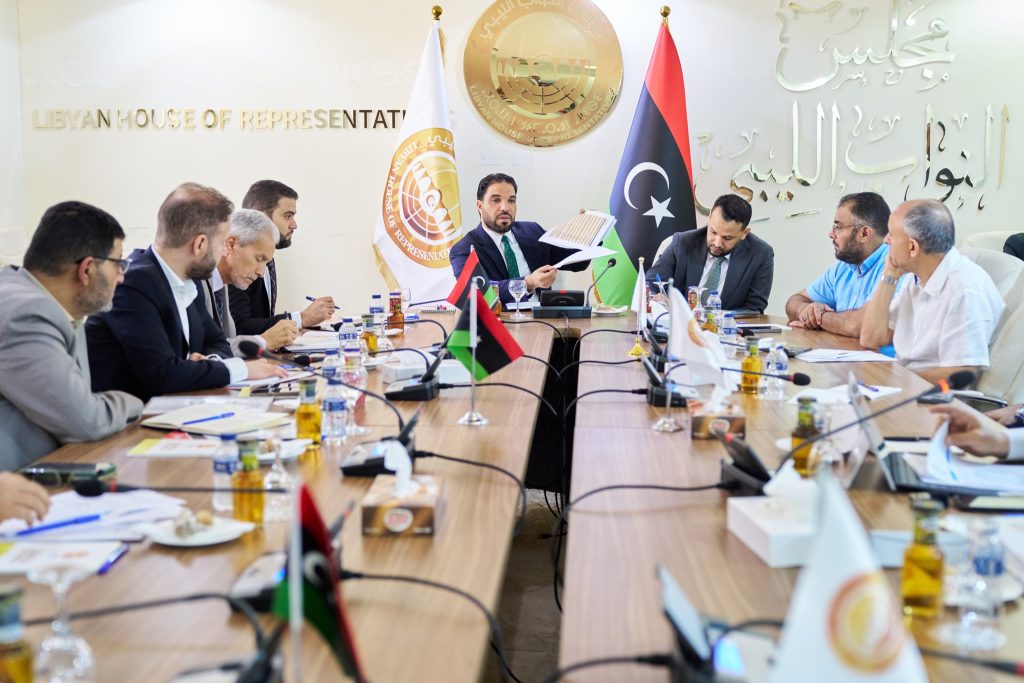
The meeting brought together committee members, representatives of the Ministry of Finance, the Director of Accounts Management, and senior officials from supervisory and administrative departments.
Discussions focused on the state’s closing accounts lock file, a critical element in the public spending cycle and a key tool for financial oversight, transparency, and accountability. Participants highlighted challenges delaying completion of the process, including public entities’ failure to submit financial statements on time, weak inter-institutional coordination, and delays in executive procedures. These shortcomings, it was noted, have hampered the state’s ability to prepare accurate balances and assess actual spending.
The session also reviewed directives issued by the Speaker of the House of Representatives, mandating immediate closure of state accounts under the supervision of the Finance and Budget Committee.
Mr. Qaderbouh stressed that closing accounts is a collective responsibility, requiring joint efforts by the Ministry of Finance, public institutions, supervisory authorities, and Parliament. He emphasized that coordinated action would reinforce financial discipline, compliance with legislation, and a culture of accountability.
Committee members underscored the need to consolidate institutional cooperation and affirmed that success in this process would demonstrate the readiness of state institutions to uphold financial regulations, forming the basis for future reforms.
The meeting further recommended the formation of a joint national technical committee, comprising representatives of supervisory authorities, to monitor progress and ensure timely submission of reports and financial statements.
This initiative reflects ongoing efforts to strengthen financial governance, oversight, and transparency, aiming to restore public trust in state institutions and provide a comprehensive picture of Libya’s financial situation.