
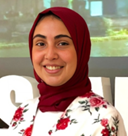
The author is a law graduate of Islamic International University and currently serves as an Assistant Outreach in the OICOA Member Institute, Federal Tax Ombudsman of Pakistan (FTO). She is also the alumni of OICOA International Exchange Program between FTO and Institution of the Mediator Kingdom of Morocco. Ms. Munir also served as the Youth Ambassador for FTO for the year 2023-2024.
According to the World Health Organization, over 1.3 billion people worldwide[1] live with some form of disability. Despite making up 16% of the global population, the individuals with special needs still faces ableism in some form, often unintentionally. Challenged with some form of disability, imagine entering into a public office to file a complaint, only to find that the entrance of the building is inaccessible, or the forms are not available in braille. This is an example of ableism—discrimination or prejudice against people with disabilities which is often lurking in plain sight and act as discrimination against the individuals which comprises 16% of the global population.
Ableism refers to discrimination, prejudice, or social bias against individuals with disabilities, favoring able-bodied people. It manifests in attitudes, policies, and practices that marginalize, or exclude those with disabilities. Often, societal norms, practices, and structures are designed with able-bodied individuals in mind, leading to the exclusion of people with disabilities. Examples include inaccessible infrastructure, lack of captions in videos, or not taking into consideration the needs of disabled individuals.
When it comes to public offices, ableism is a troubling reality as the citizens with disabilities who are already grappling with maladministration or other issues have to face additional challenges due to lack of facilities for them making the overall process of grievance redresal burdensome for them. In this context, the Office of the Mediator of the Kingdom of Morocco (IMR) sets an exemplary standard. Under the visionary leadership of Mediator of the Kingdom of Morocco, Mr. Benalilou, IMR is actively providing justice to all the citizens including individuals with disabilities. The IMR is actively addressing ableism by ensuring accessibility for individuals with disabilities.
For the assistance of every citizen, the staff at IMR is always available to guide every citizen or complainant with attention. However, to ensure inclusivity for the visually impaired people, the statute of IMR in Braille is available at the reception unit and can be easily accessed. This initiative empowers not only the visually impaired complainants to independently understand the organization’s legal framework but also serves as a valuable resource for visually impaired scholars, enabling them to conduct research regarding the laws of IMR’s independently.
IMR also provide a strong support to the hearing-impaired community through availability of professionals of sign language. These professionals are also present in all programs of IMR, enabling hearing-impaired individuals to actively participate through real-time interpretation. This initiative does more than facilitating the communication as it also equips the hearing-impaired citizens to better understand their rights and role of IMR in safeguarding them. By making knowledge accessible to the people with special needs, IMR portrays its strong commitment to mitigate ableism and ensures that voice of every citizen is heard without any discrimination.
The above instances provide a glimpse in the way IMR act to ensure that their office is accessible for the people with special needs. The Moroccan monarchy has always been a strong advocate for the rights of the people with disabilities with which the vision of Mediator of the Kingdom Mr. Benalilou deeply resonates. It is the goal of all the offices of Ombudsman and Mediation around the world that justice must be provided to all the citizens without any discrimination. Thus, by mitigating ableism in all its subtle forms all public offices can provide an environment which is accessible and inclusive for all. On International Day of Persons with Disabilities, the OIC Ombudsman Association members aims to create a world where everyone, regardless of their abilities, can fully participate in society and have access to justice. The time is now to champion inclusivity, and OICOA is leading the way.
[1] World Health Organization, “Disability,” accessed November 29, 2024, https://www.who.int/health-topics/disability.